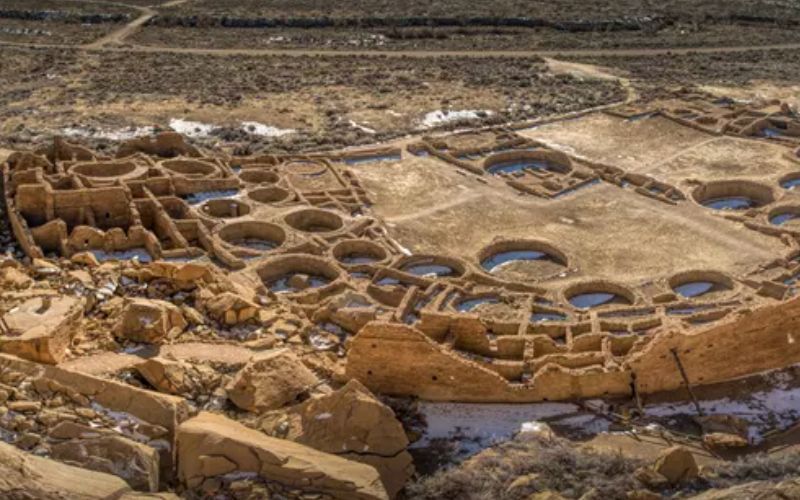
Amid strong objections from tribal nations and advocacy groups, the Trump administration is moving to overturn a federal drilling ban near Chaco Canyon, a landscape widely regarded as sacred by Indigenous communities across the Southwest.
The administration recently announced a short, one-week public comment period as it considers opening the area to additional oil and gas leasing. The proposal would revoke Public Land Order 7923, a measure that withdrew federal minerals from future leasing within a roughly 10-mile radius of Chaco Culture National Historical Park. The order was the result of years of negotiation and tribal consultation aimed at protecting the Greater Chaco region.
Tribal leaders and advocates say the timeline—and the process itself—fails to meet the federal government’s obligations to consult with sovereign tribal nations.
Get the latest news right to your inbox
Sign up
More newsletters »
“Chaco Canyon is a sacred place of deep cultural and spiritual significance to New Mexico and Arizona tribes. In its efforts to open up this sacred place to drilling, the Trump administration is ignoring its obligation to consult with area tribes and get their consent for development. In announcing a seven-day public comment period to decide the fate of a 1,000-year-old sacred place, the Trump administration has also told tribes that they are being given 30 days to comment on the decision to open Chaco Canyon to oil and gas drilling,” said Judith LeBlanc, executive director of the Native Organizers Alliance.
LeBlanc emphasized that tribal nations are not simply another stakeholder group in the process.
“Tribes are not simply public citizens. Our sovereign nations have inherent rights to make decisions about their lands, waters, and resources. Tribes hold nation-to-nation relationships with the federal government. It is a violation of the rights of sovereign tribal nations to provide just 30 days, which includes both national holidays and several traditional holidays for Pueblos, to weigh in on the most significant change to this sacred place in decades. Asking for public comments through an online portal is also a substantial barrier to our community. So many in the community, including elders, have inconsistent or unreliable internet access, essentially silencing or excluding voices that should be included.”
She added that meaningful consultation must go beyond online submissions and limited timelines.
“The Trump administration must conduct proper consultation with the impacted tribes whose origin stories, ceremonies, traditional foods and medicines, and cultural artifacts live within Chaco Canyon.”
Diné, Pueblo, and allied organizations have also condemned the proposed rollback, describing Public Land Order 7923 as a hard-fought compromise and part of a broader effort to protect land, water, and community health throughout the Greater Chaco Landscape.
Advocates are calling on the Bureau of Land Management to extend the public comment period and hold in-person meetings in affected Navajo and Pueblo communities, arguing that current outreach efforts exclude many residents.
The region is already heavily developed, with nearly 40,000 oil and gas wells across the Greater Chaco Landscape. Tribal leaders and environmental advocates warn that lifting protections could intensify existing impacts on air quality, water resources, and cultural sites.
In addition to proposing the revocation, the Department of the Interior has resumed quarterly oil and gas lease sales in the area and increased permitting for new wells—moves critics say further threaten one of the most culturally significant Indigenous landscapes in the United States.
Related
Levi RickertPublisher/Editor
Levi "Calm Before the Storm" Rickert (Prairie Band Potawatomi Nation) is the founder, publisher and editor of Native News Online. Rickert was awarded Best Column 2021 Native Media Award for the print/online...
More by Levi Rickert