Latest market newsIEA cuts oil demand growth forecast, keeps surplusMarket: Crude oil12/02/26The IEA today cut its oil demand growth forecast for 2026, but its estimate of a substantial supply surplus remains.In its February Oil Market Report (OMR), the Paris-based agency said it sees demand increasing by 850,000 b/d this year, lower than the 930,000 b/d it forecast in its January OMR, because a rally in prices in the first few weeks of the year will have "weighed on growth prospects."The front-month Ice Brent price rose by $10/bl in January and closed above $70/bl for the first time since July 2025, pushed higher by a combination of supply outages and escalated tensions between the US and Iran.The IEA's new demand growth forecast puts overall demand in 2026 at 104.87mn b/d. Demand will peak in the fourth quarter at above 106mn b/d, the agency said. Highlighting how these estimates are subject to change, the IEA's first take on 2026 demand growth, made in April 2025, was for 690,000 b/d.Its estimates continue to diverge wildly from those made by Opec's research unit, which this week forecast oil demand will grow by 1.38mn b/d to 106.52mn b/d in 2026.The IEA's 2026 supply forecast is for growth of 2.4mn b/d to 108.56mn b/d, assuming Opec+ maintains its current production plan. This results in a supply surplus of 3.7mn b/d, the same as in its January OMR.The IEA said its December data show a 37mn bl rise in global oil inventories, taking stockbuilds in 2025 to "an extraordinary" 477mn bl, or 1.3mn b/d. It said this level was last seen in the pandemic year of 2020. "As global refinery activity declines seasonally from an all-time high reached in December, and oil supply recovers from recent outages, it remains to be seen when surplus barrels finally move ashore in the Atlantic Basin," it said.By Ben WinkleyShareRelated news postsArgus illuminates the markets by putting a lens on the areas that matter most to you. The market news and commentary we publish reveals vital insights that enable you to make stronger, well-informed decisions. Explore a selection of news stories related to this one.News12/02/26Dangote CDU restarts, test runs on RFCC due next weekDangote CDU restarts, test runs on RFCC due next weekLondon, 12 February (Argus) — The Dangote refinery's 650,000 b/d crude
distillation unit (CDU) in Nigeria is operating again after maintenance, while
the gasoline-producing residual fluid catalytic cracker (RFCC) is expected to
begin test runs next week ahead of restarting, chief executive David Bird said.
The CDU received 170,000 bl of crude on 8 February, followed by 450,000 bl on 9
February and 537,000 bl on 10 February, according to industry sources and a
source at the refinery. Bird said this week that the CDU was "operating steadily
at the full nameplate capacity of 650,000 b/d". The highest throughput achieved
as of 20 January was 570,000 b/d, according to an internal company report seen
by Argus at the time. The CDU was offline for around two weeks from 24 January
for maintenance. Dangote imported intermediate products during the outage to
maintain supply to customers. Bird's reference to the 650,000 b/d nameplate
figure suggests that planned de-bottlenecking work — expected to lift capacity
to 700,000 b/d — has not yet been completed. The RFCC, which has been offline
since December, is scheduled to begin "performance test runs" next week, Bird
said. The naphtha hydrotreater, isomerisation unit and catalytic reformer —
which Dangote groups together as the "motor spirit block" — were running this
week but had not yet reached full capacity following January maintenance, an
industry source told Argus . Dangote told Argus on 11 February that "full
restoration and optimisation" of the motor spirit block had been achieved. By
Adeibyi Olusolape Send comments and request more information at
feedback@argusmedia.com Copyright © 2026. Argus Media group . All rights
reserved.Find out moreNewsPBF bullish on rising crude supplies, Venezuela12/02/26News12/02/26PBF bullish on rising crude supplies, VenezuelaHouston, 12 February (Argus) — US independent refiner PBF Energy is benefiting
from rising medium and heavy crude supplies and expects the trend to continue as
more Venezuelan crude comes to the market, the company said today. Sour crude
differentials began widening in the middle of 2025 which carried through the
fourth quarter with growing supplies, including from the Opec+ group of
countries, chief executive Matthew Lucey said in an earnings call. The recent
development of more Venezuelan crude entering the open market is an additional
tailwind for US refiners and PBF in particular as the company can run up to 60pc
of its system with heavy sour crude, he said. More Venezuelan heavy sour is
hitting the global market after trading firms Trafigura and Vitol were approved
by the US government to market unsanctioned Venezuelan oil following the US
capture of former Venezuelan president Nicolas Maduro on 3 January. More
recently, the US lifted sanctions on Venezuela's oil exports, with caveats
prohibiting sales to Cuba, business deals involving many Chinese companies and
oil-for-debt arrangements. "The impact to the US refining system with those
sanctions being lifted is instantaneous," Lucey said, while also acknowledging
that "there will be many, many years of investment and potential growth in
Venezuela." Fellow US independent refiner Valero said last month that it has
ramped up purchases of Venezuelan crude and expects it to be a major heavy
feedstock this quarter. Two other large US refiners, Phillips 66 and Marathon
Petroleum, said last week that they had recently purchased Venezuelan crude. US
major Chevron, which has been operating in Venezuela with state-owned PdV under
a special waiver from US sanctions, is also planning to run more Venezuelan
crude in its US refineries. Chevron currently produces about 250,000 b/d in
Venezuela through its joint ventures, but the company has said that it could
grow this by 50pc over the next 18-24 months. By Eunice Bridges Send comments
and request more information at feedback@argusmedia.com Copyright © 2026. Argus
Media group . All rights reserved.NewsUS House votes to lift Trump's Canada tariffs11/02/26News11/02/26US House votes to lift Trump's Canada tariffsWashington, 11 February (Argus) — The US House of Representatives on Wednesday
took the symbolic step of voting to overturn President Donald Trump's tariffs on
imports from Canada. The House voted 219-211 in favor of a resolution
terminating the national emergency Trump proclaimed in February 2025 to justify
his tariff actions against Canada. The Senate last year passed two separate
resolutions voting to overturn Trump's tariffs on imports from Canada and from
Brazil. Trump has vowed to veto the House resolution and the vote margin on
Wednesday is not sufficient to overturn his veto. Wednesday's vote tally
included six Republicans, who defied Trump's threats to run primary candidates
against them if they voted to challenge his tariff authority. "Any Republican,
in the House or the Senate, that votes against TARIFFS will seriously suffer the
consequences come Election time, and that includes Primaries!", Trump posted
shortly before the House vote. Trump cited a law called the International
Emergency Economic Powers Act (IEEPA) to justify his tariff actions last year.
The Supreme Court is expected to rule soon on whether Trump's use of IEEPA is
legal. The administration's lawyers told the Supreme Court last year that
Congress could have voted, but did not, to terminate the economic emergencies
declared by Trump to justify his tariffs. By Haik Gugarats Send comments and
request more information at feedback@argusmedia.com Copyright © 2026. Argus
Media group . All rights reserved.NewsVenezuelan oil heads to Italy, Spain, Israel: Update 211/02/26News11/02/26Venezuelan oil heads to Italy, Spain, Israel: Update 2Adds Israel as destination in paragraph 3 Barcelona, 11 February (Argus) — Three
cargoes of Venezuelan crude heading across the Atlantic are signalling for
Sarroch in Italy, Cartagena and Bilbao in Spain, and Israel, according to Argus
tracking. Suezmax Poliegos updated its destination overnight to trading firm
Vitol's 300,000 b/d Sarroch refinery in Italy, where it is scheduled to arrive
on 17 February. It is carrying around 1mn bl of Venezuelan crude, loaded at the
country's Jose terminal. People with knowledge of the deal told Argus that
Israel's Bazan will take part of this cargo, around 200,000 bl, for production
of bitumen at its 197,000 b/d Haifa refinery. Bazan was approached for comment.
Vitol has been approved by the US government to market Venezuelan crude. Sarroch
was the most recent Mediterranean destination for Venezuela crude, in
March-April 2025 , ahead of tighter US sanctions on Caracas that halted
supplies. Another 1mn bl on Suezmax Nissos Koufonissi updated its destination
and is heading for the southeastern Spanish port of Cartagena, where Repsol
operates a 220,000 b/d refinery. It is slated to arrive on 19 February. Suezmax
Folegandros was already signalling arrival on 15 February at the Spanish
Atlantic port of Bilbao, where integrated Repsol has a 220,000 b/d refinery.
Repsol would not comment on the matter. According to workers connected to the
refinery, the cargo is a spot purchase and not part of a crude-for-debt swap
scheme that Repsol ran with Venezuela's state-owned PdV. Under that scheme Spain
received 55,000 b/d of Venezuelan crude in 2024, all of which went to Repsol's
refineries at Bilbao, Cartagena and La Coruna. This fell to 15,000 b/d last
year, after sanctions tightened. None of the tankers' destinations are
confirmed, and they could yet divert. By Adam Porter, Jonathan Gleave and
Isabella Reimi Send comments and request more information at
feedback@argusmedia.com Copyright © 2026. Argus Media group . All rights
reserved.NewsOpec sticks to oil demand forecasts11/02/26News11/02/26Opec sticks to oil demand forecastsLondon, 11 February (Argus) — Opec has kept its oil demand growth projections
for 2026 and 2027 unchanged. In its Monthly Oil Market Report (MOMR), Opec
forecasts oil demand to grow by 1.38mn b/d to 106.52mn b/d in 2026 and by 1.34mn
b/d to 107.86mn b/d in 2027. Opec said "healthy oil demand growth" is being
supported by monetary policy easing by most major central banks last year. Opec
also kept its supply forecasts unchanged. It sees non-Opec supply growing by
630,000 b/d to 54.78mn b/d in 2026 and by 610,000 b/d to 55.39mn b/d in 2027.
Opec+ crude output — including Mexico — fell by 439,000 b/d to 42.448mn b/d in
January, led by a steep output drop in Kazakhstan, based on an average of
secondary sources including Argus . Opec estimates the call on Opec+ crude at
43mn b/d in 2026 and 43.6mn b/d in 2027. By Aydin Calik Send comments and
request more information at feedback@argusmedia.com Copyright © 2026. Argus
Media group . All rights reserved.Related ProductsUnlock the True Value of Crude with Argus Refinery Gate Values (RGVs)Unlock the True Value of Crude with Argus Refinery Gate Values (RGVs)Make smarter decisions across the crude supply chain - from production to refiningFind out moreArgus Refinery Gate Values: A crucial piece of the crude supply chain puzzleArgus Refinery Gate Values: A crucial piece of the crude supply chain puzzleUnlock the true value of your crude or choose the best crude for your refineryFind out moreArgus Asia Crack Spread Forward CurvesIndependent market valuation tool to support investment and trading decisions across Asia’s oil markets.Find out moreArgus Russian Domestic Crude MarketDetailed coverage of the domestic Russian crude market.Find out moreArgus FundamentalsSupply and demand intelligence for global crude and refined products markets.Find out moreBusiness intelligence reportsGet concise, trustworthy and unbiased analysis of the latest trends and developments in oil and energy markets. These reports are specially created for decision makers who don’t have time to track markets day-by-day, minute-by-minute.Learn more
Related Articles
Nevadacurrent.com·
Judge upholds BLM approval of Rhyolite Ridge lithium mine - ICT
U.S. District Judge Cristina Silva ruled the Interior Department took a sufficiently “hard look” at the impacts of the mine on Tiehm’s buckwheat and Fish Lake Valley tui chub and “reasonably found” that the project would “not result in unnecessary or undue degradation of Tiehm’s buckwheat.”
Mining
Nativenewsonline.net·
Tribes Object as Trump Administration Moves to Reopen Chaco Canyon to Drilling - Native News Online
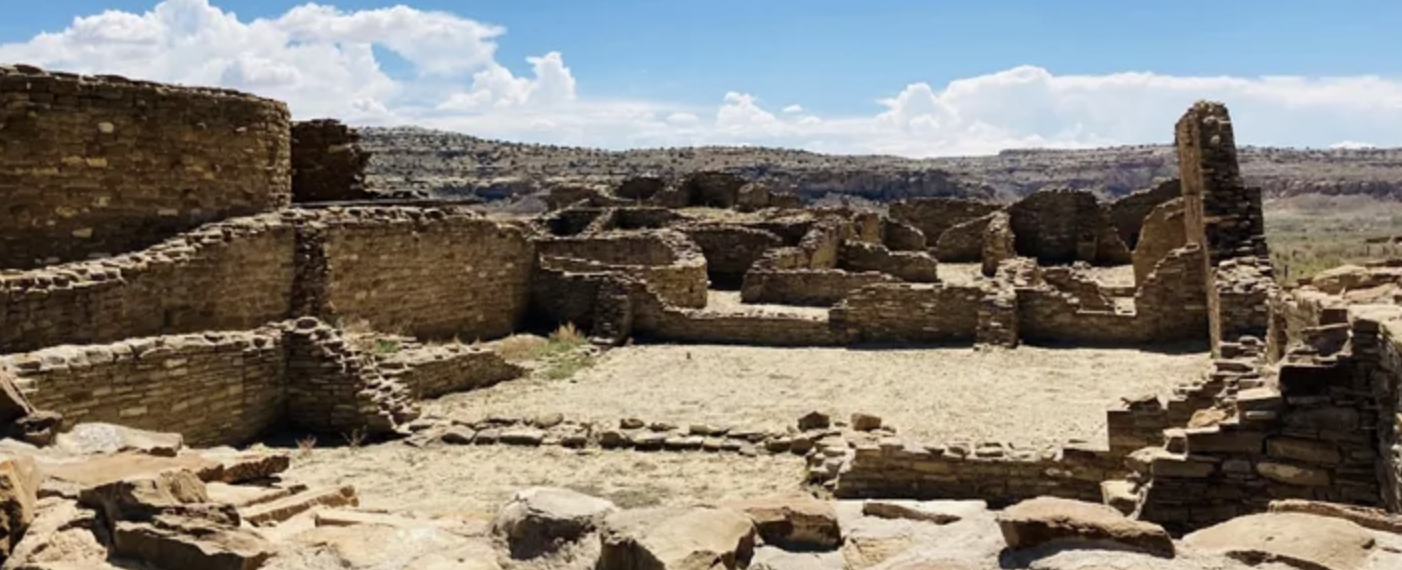
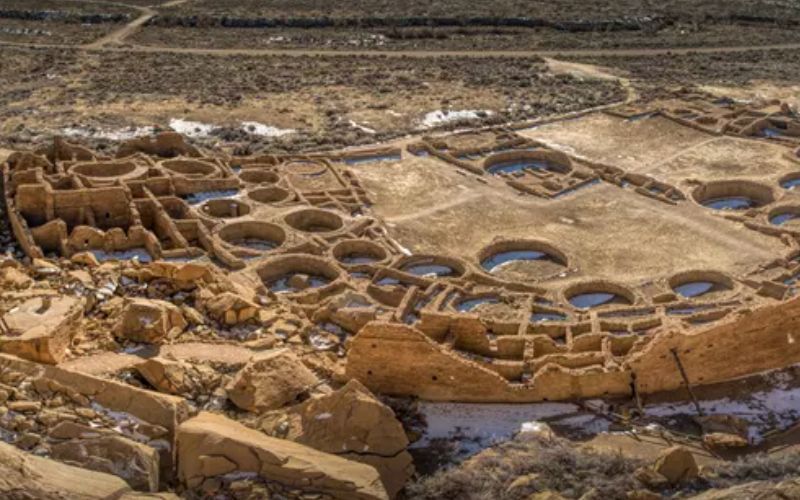
Amid strong objections from tribal nations and advocacy groups, the Trump administration is moving to overturn a federal drilling ban near Chaco Canyon, a landscape widely regarded as sacred by Indigenous communities across the Southwest. The administration recently announced a short, one-week public comment period as it considers opening the area to additional oil and […]
Local NewsIndigenous
Brandonsun.com·
‘The most lasting legacy:’ Famed Alberta mantle geochemist namesake of new mineral – Brandon Sun
EDMONTON – From the coalfields of northern England to the Arctic snows and the steaming jungles of Brazil, diamond hunter and scholar Graham Pearson has carved a name for himself that now lives...
ScienceLocal News
Nativenewsonline.net·
Ancient Indigenous Lands in New Mexico Could Be Lost to Mining and Drilling. The Public has 7 Days to Weigh In. - Native News Online
A federal court decision on March 31 could see land surrounding Chaco Canyon National Historic Park losing its public land protection, leaving more than 300,000 acres vulnerable to oil and gas drilling. Chaco Canyon is located in the San Juan Basin, 150 miles northwest of Albuquerque. The surrounding desert landscape of Chaco Canyon contains rich […]
Indigenous
Montrealgazette.com·
MAX Power Advances Basin-Scale Discovery Potential with Multi-Zone Natural Hydrogen and Helium Intervals at Bracken - Montreal Gazette
New Lawson Analog Target Identified Near Original Discovery on Genesis TrendBracken Well at Grasslands Project, 325 km southwest of Lawson Discovery, is
Australianminingreview.com.au·
Ausenco secures Hillside contract
Ausenco has been awarded the EPCM contract for Rex Minerals Hillside project in South Australia, about 150 km west of Adelaide.